






The next mining supply shock won’t start at a mine: study
me-metals: Processing plants, chemical supplies and logistics—not mines—are the most likely source of the next critical mineral supply shock, according to a GEM Mining Consulting study that challenges conventional mine-focused planning.
According to me-metals cited by mining.com, The study argues that usable supply can fail even as mines continue operating because bottlenecks develop elsewhere in the value chain. A shortage of sulphuric acid, an unqualified anode production route, a missing furnace, equipment export restrictions, a smelter closure or constraints on power and water can remove far more supply than the apparent size of the disruption suggests.
Rather than forecasting specific outcomes, the report develops stress scenarios to illustrate the scale of disruptions that operators and policymakers should be testing. The analysis starts with about 3.6 million tonnes per year of copper produced through acid-leach routes, a 72% battery-grade graphite supply gap outside the dominant producer and an announced diversified rare-earth magnet pipeline of roughly 18,000 tonnes of rare-earth content.
“The next mining supply shock may start in a reagent tank, a furnace, a port, a laboratory or an equipment order book,” GEM said. “Resource security is produced by a network. The orebody matters, but so do the systems that convert it into qualified, continuous supply.”
The findings highlight a broader shift in how critical mineral supply risk should be assessed. While governments and industry have focused on developing new mines, processing capacity, chemical inputs, equipment availability and customer qualification increasingly determine whether production can reach end users.
Acid constraint
The report identifies sulphuric acid as one of the industry’s largest hidden vulnerabilities because it supports copper solvent extraction-electrowinning operations, nickel high-pressure acid leach projects, cobalt co-production, hard-rock lithium conversion, rare-earth processing and battery precursor manufacturing.
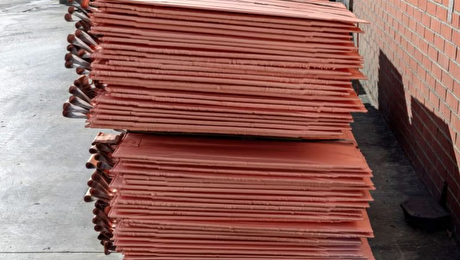
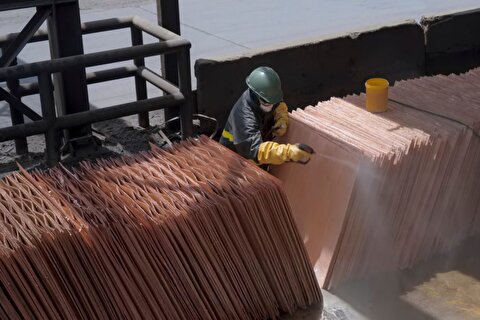
GEM estimates that more than 15% of global primary copper production, or about 3.6 million tonnes annually, depends on acid-leach routes. Under its central stress case, a 90-day acid disruption would expose roughly 111,000 tonnes of copper production, while a year-long disruption could affect about 947,000 tonnes.
The analysis notes that roughly half of seaborne sulphur trade passes through the Strait of Hormuz, while China halted sulphuric acid exports in May 2026 as sulphur markets tightened. It concludes that producers should treat acid availability as a production constraint rather than simply a reagent cost, incorporating separate monitoring of sulphur feedstock, burner acid and smelter by-product acid into production planning.
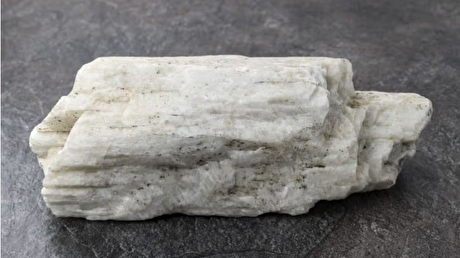
Graphite and rare-earth magnets present a different challenge. Existing inventories can cushion short-term disruptions, but they do little to resolve structural processing bottlenecks. Alternative mines cannot quickly produce qualified battery-grade anode material or permanent magnets because purification, graphitization, coating, separation, metallization, specialized equipment, technical know-how and customer qualification all require time.
GEM estimates that with 28% N-1 inventory coverage, a one-year disruption would still leave about 60% of annual battery-grade graphite demand outside the dominant supplier uncovered after a 60-day inventory buffer. It also estimates that one- to two-year delays affecting 25% to 50% of the planned 18,000-tonne diversified rare-earth magnet pipeline could defer between 4,500 and 18,000 capacity-years.
The report also identifies route-specific vulnerabilities across selected Latin American mineral supply chains, arguing that exposure varies significantly depending on the processing pathway rather than the location of the orebody alone.
The study concludes that future supply resilience will depend as much on strengthening processing networks, chemical supply and industrial infrastructure as on discovering new mineral deposits.
source: mining.com
Related News
twenty-one Days ago
twenty-one Days ago
twenty-one Days ago
twenty-one Days ago
twenty-one Days ago
twenty-one Days ago
Top News