



Maanshan Iron & Steel orders new Danieli continuous caster

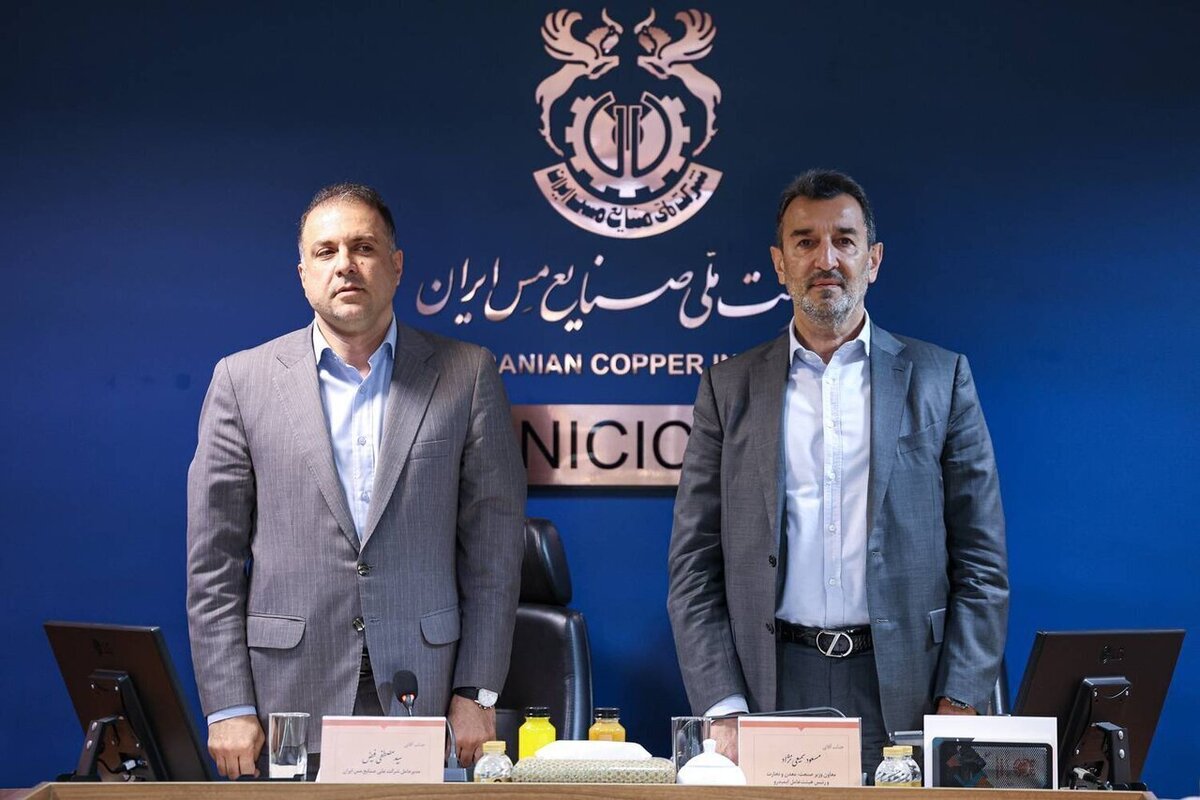
According to me-metals citied by Mes Press, the CEO of the National Iranian Copper Industries Company (NICICO), Seyed Mostafa Feiz outlined the latest status of exploration activities at the National Iranian Copper Industries Company, stating: “The company’s total mineable reserves have increased from 16.8 billion tons at the beginning of April to 18.2 billion tons, representing 8% growth. Geological resources have also increased from 22.2 billion tons to 24.5 billion tons, a growth of 10.6%”.
He added: “This increase is the result of the acceleration of the company’s exploration activities in recent months. During March to July 2026, 198,462 meters of exploration drilling were completed, equivalent to 40% of the 500,000-meter drilling target set for 2026”.
The CEO of the National Iranian Copper Industries Company continued: “The company’s drilling fleet now stands at 78 rigs, and with the addition of 10 deep-drilling rigs, the total number of drilling rigs will increase to 90” .
Referring to the increase in reserves at the company’s major mines, Feiz said: “The Miduk copper mine have been one of the most significant areas of progress during this period. Mineable reserves at the mine have increased by 123%, from 793 million tons to 1.77 billion tons, while its geological resources have risen by 186% to 2.883 billion tons”.
He added: “At the Darreh copper mine, mineable reserves have also increased by 12.5%, while geological resources have risen by 33%”.
The CEO of the National Iranian Copper Industries Company also announced the issuance of a new discovery certificate for the Sar Cheshmeh copper mine, saying: “The certificate was issued for proven reserves of more than 4.5 billion tons with an average grade of 0.44%. In terms of proven reserve volume and area, it is considered the largest discovery certificate ever issued in the history of Iran’s Ministry of Industry, Mine and Trade”.
He continued: “The mineable reserves of the Sar Cheshmeh cluster have also reached 7.7 billion tons, with an average grade of 0.41%, while the validity of the Sar Cheshmeh copper mine has been extended until 2050”.
Feiz also announced the receipt of an amended discovery certificate for the Korur copper mine, covering 333 million tons of sulfide ore with a grade of 0.26% and 24 million tons of oxide ore with a grade of 0.24%.
According to him, a discovery certificate has also been obtained for the Sarmeshk mine, covering 60 million tons of sulfide ore with a grade of 0.27% and 400 thousand tons of oxide ore with a grade of 0.37%. In addition, two new exploration licenses covering areas of 75 and 150 hectares have been issued in Kerman Province.
Referring to the expansion of exploration studies, the CEO of the National Iranian Copper Industries Company said: “Surface exploration studies have been conducted across approximately 90 square kilometers, while the preparation of geological, geochemical, geophysical and topographic maps in prospective mineral areas is on the agenda”.
He emphasized: “The simultaneous expansion of drilling capacity and exploration studies enables more precise identification and assessment of mineral reserves and strengthens the company’s resource base”.
Referring to the simultaneous expansion of exploration and increased mining activity, Feiz said: “During March to July 2026, sulfide ore extraction increased by approximately 7% compared with the same period last year, while the extraction of oxide ore and waste increased by approximately 4%”.
He added: “Total extraction also increased by more than 4%, rising from more than 147 million tons to more than 153 million tons”.
The CEO of the National Iranian Copper Industries Company also announced a 60% expansion in the area covered by the operating license for the Sungun copper mine, saying: “The area has increased from 93.6 square kilometers to 148.5 square kilometers. An operating license has also been obtained for the Kohang copper mine, with proven reserves of 47 million tons and an average grade of 0.5%”.
Feiz went on to discuss the development of Iran’s copper resources in recent years, stating: “Iran’s copper resources have increased from 8.5 billion tons at the beginning of 2018 to 24.5 billion tons, while mineable reserves have increased from 6.6 billion tons to 18.2 billion tons”.
He added: “Since the beginning of 2018, more than 2.2 million meters of exploration drilling have been completed. In 2025, with drilling exceeding 550 thousand meters, the country recorded its highest-ever level of exploration core drilling”.
According to the CEO of the National Iranian Copper Industries Company, during this period, surface exploration studies were also conducted across a total area of approximately 6 thousand and 500 square kilometers. The Sereydoun deposit, described as a world-class deposit, was discovered with resources of more than 5.1 billion tons and an average grade of 0.44%.
Feiz concluded: “Taken together, these measures have significantly increased the company’s reserves and resources. Alongside the expansion of exploration capabilities, they have strengthened the foundation needed to sustain production and support the long-term development of Iran’s copper industry”.


